Paper pianos
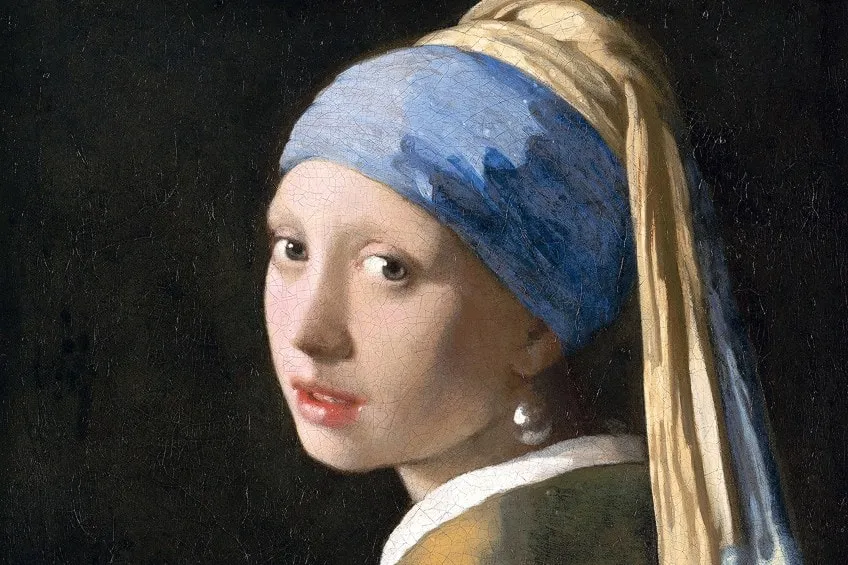
Like so many immigrant kids, every Thursday night of my childhood was spent hammering out classical pieces on the immaculately dusted piano in my piano teacher's basement. The whole basement was dimly lit except for the piano and a huge print of Girl with a Pearl Earring looming above. I would often lock eyes with the Girl as I tried not to cry over my perceived incompetence as a young pianist. The drudgery of the expected daily piano practice was even worse -- scales, triads, passages repeated over and over at lifeless tempos -- so much so that I would often only practice on the day before the lesson (and sometimes get away with it). I stuck with it though, largely due to my mom's tireless enthusiasm for my musical pursuits and her commitment to funding my lessons no matter what. Not to mention, my sisters played the piano and I wanted to be more like them. I solo performed a lot at church, and on school stages I'd accompany my friends on piano. Once I'd built up an identity as a pianist, there was no going back.
When I was seventeen, I was asked to teach the kids at my church how to play piano. I'd never taught anyone anything in a meaningful capacity, but my fears of being a bad teacher were temporarily soothed by our well-meaning choir director who gave me a rousing pep talk and four old 61-key keyboards. I realized in horror that she wanted me to teach group lessons to an unspecified number of kids, all in a single room, with no headphones. The thought of multiple pianos all playing discordant notes at max volume was certainly unpleasant, but my main fear was whether my resolve was strong enough to outshout everyone. I was pretty sure that this class would be full of young, boisterous agents of chaos who'd rather be doing absolutely anything else. In my mind, they'd all gang up on me and make my life a living hell for (at least) 30 minutes a week, because I knew from personal experience that kids can smell fear a mile away.
if get loud:
- Waterfall! Shhhhh.
- Quiet everybody!
- Quiet until they are.
- “I guess you don’t want your free time at the end.”
- “You are very close to losing your free time.”
- “I respect you, so I expect you to respect me as well. That means no talking when I’m talking. I don’t want to remind you again.”
- “That’s it. No free time today.”
- Use the disapproving stare.
An excerpt from my second lesson plan. I can't recall which approach must have been more effective on rowdy seven-year-olds, the respect lecture or the disapproving stare.
The first few classes mostly dispelled my fears. The kids were unruly and distracted as a group, but completely angelic one-on-one. I would often spend 10 minutes doing a classroom-style group lesson, 10 minutes rotating between students for one-on-one tips and 10 minutes for overflow and free time1. There was usually one bright student who aced every exercise and asked intelligent questions that moved the group lesson along very nicely. Everyone else was deeply uninterested in those first 10 minutes where they weren't allowed to touch the keyboard. They were clearly trying their best though, and so was I.
One regular student, the lead troublemaker, would distract everyone until I timidly asked him to stop, at which point he'd storm out of the room. This went on for a few classes until I tried something new: I asked him to conduct the class as we clapped a short rhythm. He aced it and stopped disrupting the class, so long as he was the centre of attention exercising his capabilities as a leader.
Another student was seemingly allergic to silence. She'd chat throughout the entire group lesson, ignoring my pleas for quiet. Her behaviour wasn't entirely unjustified -- the group lesson probably wasn't a great use of time, considering we only had 10 minutes on the keys. I figured she just didn't want to be there, until I saw her eyes light up as she learned her first melody. Every lesson she would talk and talk for the first 10 minutes, then she'd get to work and impress herself.
Soon, we started running out of keyboards for everyone to play. At our peak class attendance, we had eight little agents of chaos. Keyboards, on the other hand, seemed to evaporate from the supply closet into thin air until we had just one left. First I had the kids take turns on the keyboards, and I watched as even the most enthusiastic students seemed to lose their love for music in real-time while waiting their turn. Then I decided two students would play on each keyboard, one in a higher register that was about as audible as chimes blowing in the distance when the student on the lower register was playing. So I got creative: I printed out pianos on paper for the students waiting their turn, so that they could at least practice proper hand and arm positioning.2
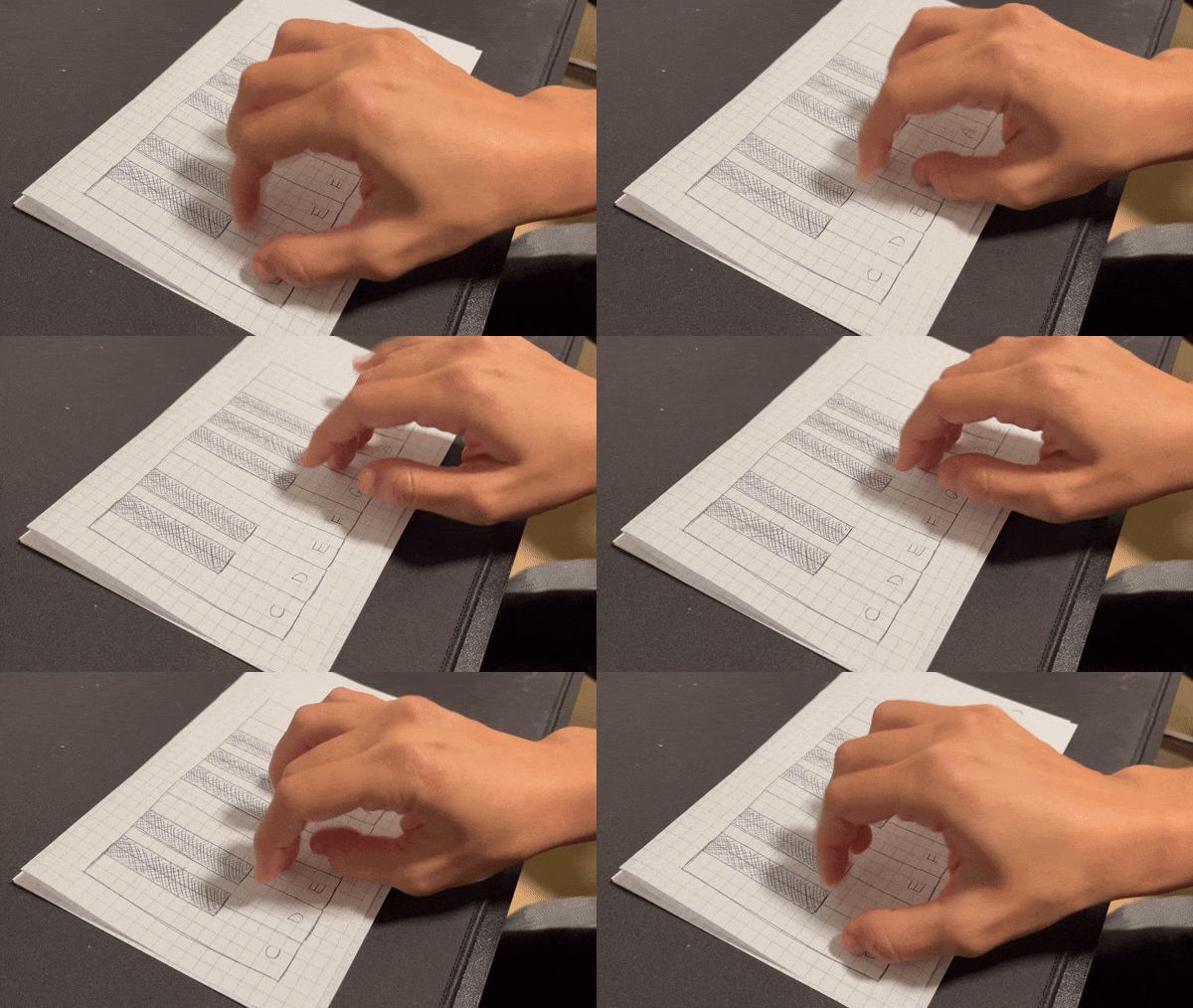
The paper pianos turned out to be a decent compromise. Students would practice more-or-less diligently on the paper pianos and they'd get excited for their turn on the real deal. I can't say for certain whether they were better for having practiced on paper, but I'd imagine it kept them in the flow of the lesson. They say that athletes who think about their sport perform better, so doing the same with music and a tactile aid should help even more.
Having loved ones who work in the Toronto District School Board, I often think of all the teachers who teach 30+ kids at a time, in classrooms with no AC, who have to buy their own supplies as Ontario public school budgets are relentlessly whittled down to the bone. I'm not a teacher by trade now, nor a pianist. I'm sure I didn't give those kids the most solid of piano fundamentals but I'm proud that I took a risk by accepting the task, and I hope all the administrative workers and teachers out there can also take pride in showing up and doing the best they can with what they have.
I also hope my students eventually found themselves a decent piano teacher who had more to offer than a paper piano and 1.25 minutes of undivided attention. I don't know how their piano careers turned out since I only taught them for a few months. I know that even under the watchful gaze of a parent or a centuries-old masterpiece, learning is hard -- and even with a class of well-behaved curious students, teaching is hard. We just keep showing up anyways.
I'm no monster, of course I gave them time to try playing the cool drum beats and alien voices and all the other fun stuff, but that "free time" was only granted to them if the class behaved. (I was a pretty lenient teacher, so we almost always got free time. I'm still unsure about how to discipline a group of children and I have a lot of respect for people who do it on a regular basis.)↩
It takes a long time to get this right. If you've ever been classically trained in piano, you'll probably have memories of your teacher shifting your elbow up or down, shaking out your wrists and maybe having you hold a tennis ball to get the right finger positioning. My teacher was particularly strict about proper posture because her daughter had sustained a repetitive stress injury (likely due to tense wrists) that had ended her piano career.↩